
NASA Selects Modulus
When NASA Mission Operations needed native-grade telemetry performance on tablet-class hardware, Modulus engineered, and patented, a way to do it.
Half a billion points per second
NASA Mission Operations needed to bring its high-performance desktop software, originally written in C, to low-power tablet devices without giving up any speed. The software displays high-frequency, real-time telemetry and crew-health data streamed from the International Space Station via satellite link, and it had to keep up while running on hardware a fraction as powerful as a workstation.
NASA had already tested numerous solutions without success before turning to Modulus. We delivered a method, now patented, that achieves on a tablet what NASA had previously been able to display only in native C desktop software. Today, Modulus pairs that high-performance-computing heritage with AI-accelerated delivery, bringing the same engineering rigor to modern fintech and data-intensive systems.

Data points per second processed and displayed
ISS telemetry and crew-health data
Hardware running native-grade workloads
Time-series compression method
The Problem
NASA Mission Operations was tasked with porting high-performance desktop software, written in the C programming language, to a platform that could display high-frequency, real-time telemetry and health data acquired from the International Space Station onto tablet devices with limited processing power.
The target was demanding: the solution had to process and display up to half a billion data points per second on a tablet, and it had to let mission controllers analyze telemetry and health data transferred in real time from the ISS over a satellite link. NASA evaluated numerous approaches without success before bringing the challenge to Modulus.
- Up to 500 million data points per second on a single tablet
- Real-time telemetry and crew-health data from the ISS
- Match the performance of existing native C desktop software
- Run reliably on hardware with limited processing power
The Solution
The core difficulty was a language gap. JavaScript, the practical choice for web and mobile, generally cannot match the raw performance of programs written in C. In fact, JavaScript engines are themselves typically written in C or C++. JavaScript is a high-level scripting language, and even with efforts such as asm.js to close the gap, generating highly efficient native code from a dynamic language is extraordinarily hard.
With no off-the-shelf alternative, Modulus engineers got creative. We designed and patented a method for compressing time-series data into a special format built specifically for graphical display, squeezing every last bit and byte out of every available CPU cycle. The final solution displays as much high-frequency data on a tablet as NASA had previously shown in its C desktop software, if not more.
The Result
The project was a success on its own terms, but its impact reached further. Modulus folded the same compression technique into our own charting library, StockChartX, enabling the ultra-fast display of hundreds of millions of data points in commercial software.
The work added to our portfolio of computationally intense, highly scalable, client-server applications, and it continues to inform how we push from what is to what is possible, now with AI-accelerated workflows layered on top of decades of high-performance engineering.
About the ISS
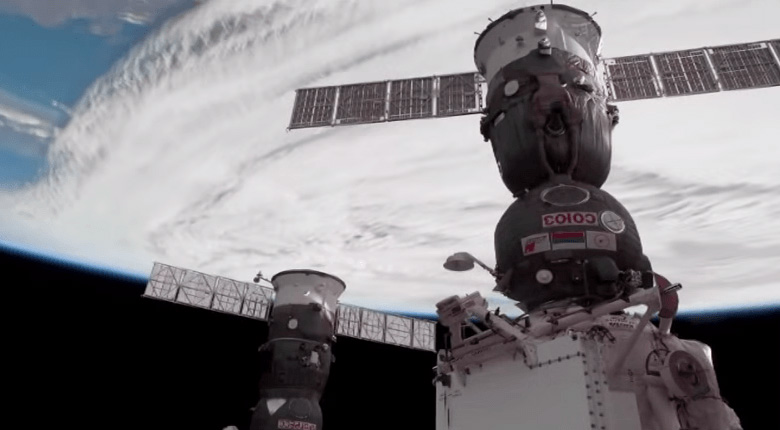
The International Space Station is a space station in low Earth orbit and the largest artificial body in orbit, large enough to often be seen with the naked eye from the ground. It is assembled from pressurized modules, external trusses, solar arrays, and other components.
The station serves as a microgravity and space-environment research laboratory, where crew members conduct experiments across biology, human biology, physics, astronomy, meteorology, and other fields, generating exactly the kind of dense, real-time data streams the Modulus solution was built to handle.
Technology behind the project
How Modulus engineered it
A patented approach to time-series compression, careful low-level optimization, and a charting library purpose-built to render enormous datasets in real time.
Patented compression
A patented method that compresses time-series data into a display-optimized format, dramatically reducing the work needed to render high-frequency streams.
CPU-cycle optimization
Low-level tuning that squeezes every bit, byte, and CPU cycle out of constrained tablet hardware to reach native-grade throughput.
Half a billion points/sec
Processing and displaying up to 500 million data points per second, meeting the throughput NASA Mission Operations required.
Real-time telemetry
Live ingestion and visualization of ISS telemetry and crew-health data transferred from orbit over a satellite link.
StockChartX integration
The compression technique was built into the Modulus charting library, StockChartX, for ultra-fast display of hundreds of millions of points.
HPC heritage, AI today
Decades of high-performance-computing engineering, now paired with AI-accelerated delivery for modern fintech and data-intensive systems.